Sign up here for our next set of workshops in West Cork!
Jan 2025: Literature and the Environment
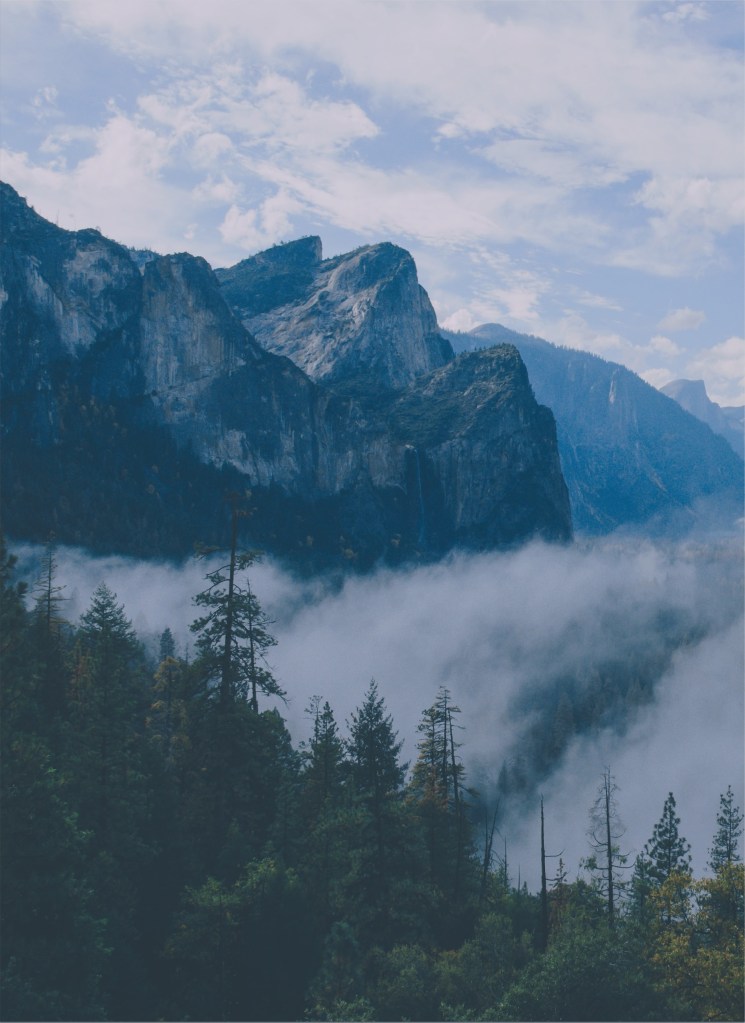
Running over 5 weeks, from January 15th to February 12th 2025, our next set of workshops will explore the relationship between Literature and the Environment. How can literature help us investigate, understand and reframe our relationship to the natural world? These 5 workshops will explore topics such as ‘The New Nature Writing’, ‘Literature as Environmental Activism’ and ‘Climate Fiction’. Each class will include a lecture and guided discussion as well as the opportunity for some creative writing. Sign up for a 5-week block or for individual classes and spend the evening discussing wonderful texts that matter!
Each workshop is 2 hours long and will be held at Event Space 1, Myross Wood House, Leap, P81 Y192.
Individual workshops cost 20 euros, or you can book all 5 workshops for the discounted price of 75 euros. Subsidized places are available – please contact us to discuss.
This set of workshops will be taught by Dr Harriet Hulme. Harriet holds a PhD in Comparative Literature from UCL and has previously taught eco-literature, world literature and contemporary literature at University College Dublin, The University of Hong Kong and University College London.
Workshop 1: Introduction to Literature and the Environment/Literature as Environmental Activism
Wednesday January 15th 2025 6-8pm
In this workshop we will discuss some key theories around the relationship between Literature and the Environment.
We will also consider whether literature can be a form of environmental activism, and explore some short texts by Margaret Atwood, Amitav Ghosh, Kathy Jetn̄il-Kijiner and others.
At the end of the class, you will have a chance to do some writing of your own, inspired by the texts we have discussed.
Workshop 2: Eco-Poetry
Wednesday January 22nd 2025 6-8pm
In this workshop we will discuss the work of several different ecopoets, including Kathleen Jamie, Juliana Spahr and Mary Oliver.
We will consider what separates eco-poetry from nature poetry, and discuss the techniques used by each of the poets to explore the relationship between the human and the more-than-human world.
At the end of the class, you will have a chance to do some writing of your own, inspired by the texts we have discussed.
Workshop 3: The ‘New’ Nature Writing
Wednesday January 29th 2025 6-8pm
In this workshop we will discuss the ‘new’ nature writing, a term often used to refer to a group of non-fiction writers whose writings combine personal reflection with myth, prose poetry, natural history and scientific observation.
We will look at essays by Robert Macfarlane, Helen Macdonald, Elizabeth Jane Barrett, and Roger Deakin.
At the end of the class, you will have a chance to do some writing of your own, inspired by the texts we have discussed.
Workshop 4: Short Stories and Speculative Fiction
Wednesday February 5th 2025 6-8pm
In this workshop we will discuss short fiction which draws on speculative forms such as magic realism and science fiction to engage with environmental breakdown and environmental restoration.
We will look at short stories by Ben Okri, Paolo Bacigalupi, Che Qiufan and Nnedi Okorafor amongst others.
At the end of the class, you will have a chance to do some writing of your own, inspired by the texts we have discussed.
Workshop 5: Cli-Fi – the Novel of the Climate Crisis
Wednesday February 12th 6-8pm
In this workshop we will discuss the climate novel and the development of cli-fi as its own genre. We will discuss whether the novel is an effective form for exploring the unique challenges of the climate crisis.
We will look at extracts of several novels, including Flight Behaviour by Barbara Kingsolver, The End We Start From by Megan Hunter, The Parable of the Sower by Octavia Butler and New York 2140 by Kim Stanley Robinson. We will discuss the use of utopian and dystopian worlds, realism versus speculative forms, the (unreliable) narrator and the role of the scientist in these novels.
At the end of the class, you will have a chance to do some writing of your own, inspired by the texts we have discussed.
 The Babel Collective